The short answer
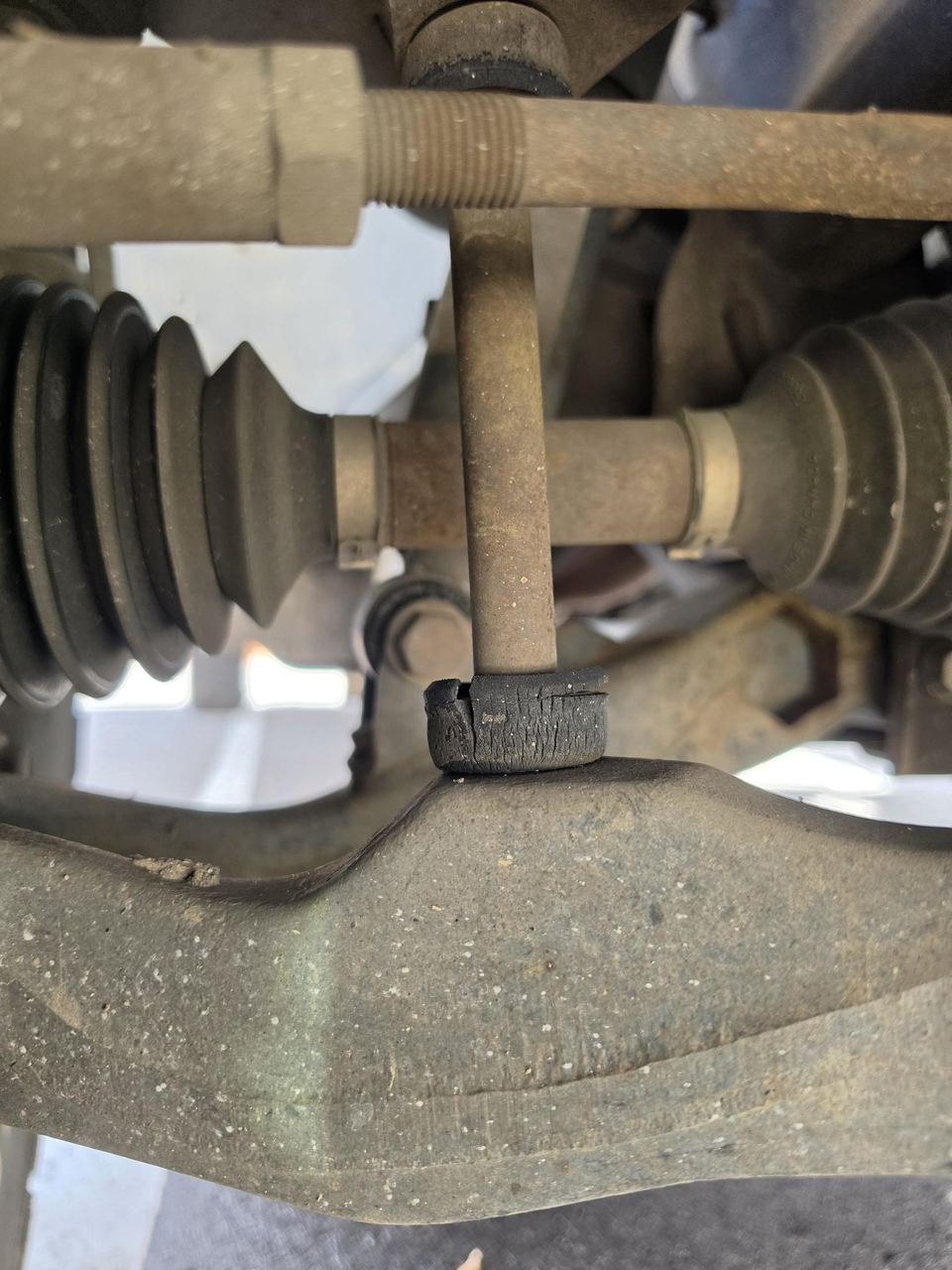
Squeaks and creaks usually come from rubber bushings or joints that have dried out or worn. They're often worse on cold mornings and over speed bumps. Many are only annoying, but a dry or worn ball joint can squeak before it fails.
Common causes
- Ball joints, dry or worn. Often a creak turning in a parking lot.
- Sway bar bushings, dry rubber squeaking over bumps.
- Control arm bushings, cracked or dried out.
- Strut mounts and spring seats, creaking or popping when turning the wheel.
- Steering parts, like a dry steering shaft or column joint, squeaking only when turning.
Don't just spray it
Spraying lubricant on a squeak can quiet it for a while and hide a worn part. Some bushings are damaged by petroleum sprays. Find the part first.
Things you can do at home
- Write down when it happens: speed, turning left or right, braking, accelerating, bumps, cold mornings.
- Check whether it follows road speed or engine speed. Coasting in neutral at a safe moment, a noise that stays is wheels, tires or driveline. One that drops away follows the engine.
- Record it on your phone. Even a short clip helps.
- Look at your tires for uneven wear, bulges or a nail.
- Check the lug nuts are all there and tight, especially after recent tire work.
How we track down a noise
We use test drives, a mechanic's stethoscope and careful attention. A good technician can tell a wheel vibration from an engine vibration from a driveline vibration. They can tell a high-pitched whine comes from a small bearing, like a pulley, not a large one like a wheel bearing. Knowing what a noise can't be matters as much as knowing what it can be.
- Ride along if you can. Show us exactly when it happens: speed, turning, braking, bumps, cold or warm.
- Reproduce it on a test drive, changing one thing at a time.
- Pin it down with a stethoscope and by inspecting and moving parts by hand with the car raised safely.
- Tell you what it is, and what it isn't, before any parts are ordered.
Getting it fixed
- Find the cause first. The right part gets replaced, not a guess.
- Written estimate first. You see what's worn before any work starts.
- Your choice of part. Options are ranked by quality and warranty term, from the best aftermarket and OEM parts.
- Where: where the car is parked, in Lake Norman, Mooresville, Denver, Lincolnton and Statesville. Like every repair we list, not every car can be done in a driveway. If we quoted your repair and can't reach the part when we arrive, you don't pay for the repair.
Get a quote for a suspension inspection
Updated November 28, 2026.