LKNLake Norman Cars Get a quote

Back to Car Tips

Car Leaking Fluid? What the Spot on Your Driveway Means

Seep, leak or danger: what the color and the spot tell you, and when to stop driving.

Discounts for repeat customers first responders police active military seniors

The short answer

Leaks are all types. Most are spots on the driveway. Some are a seep you can live with for a while, some lead to water damage inside the car, and some lead to engine failure. And some don't give you a spot first: a hose or a line can let go without warning, sometimes violently, halfway through a road trip.

The color, the feel and where it drips tell you a lot. The cause takes a look underneath.
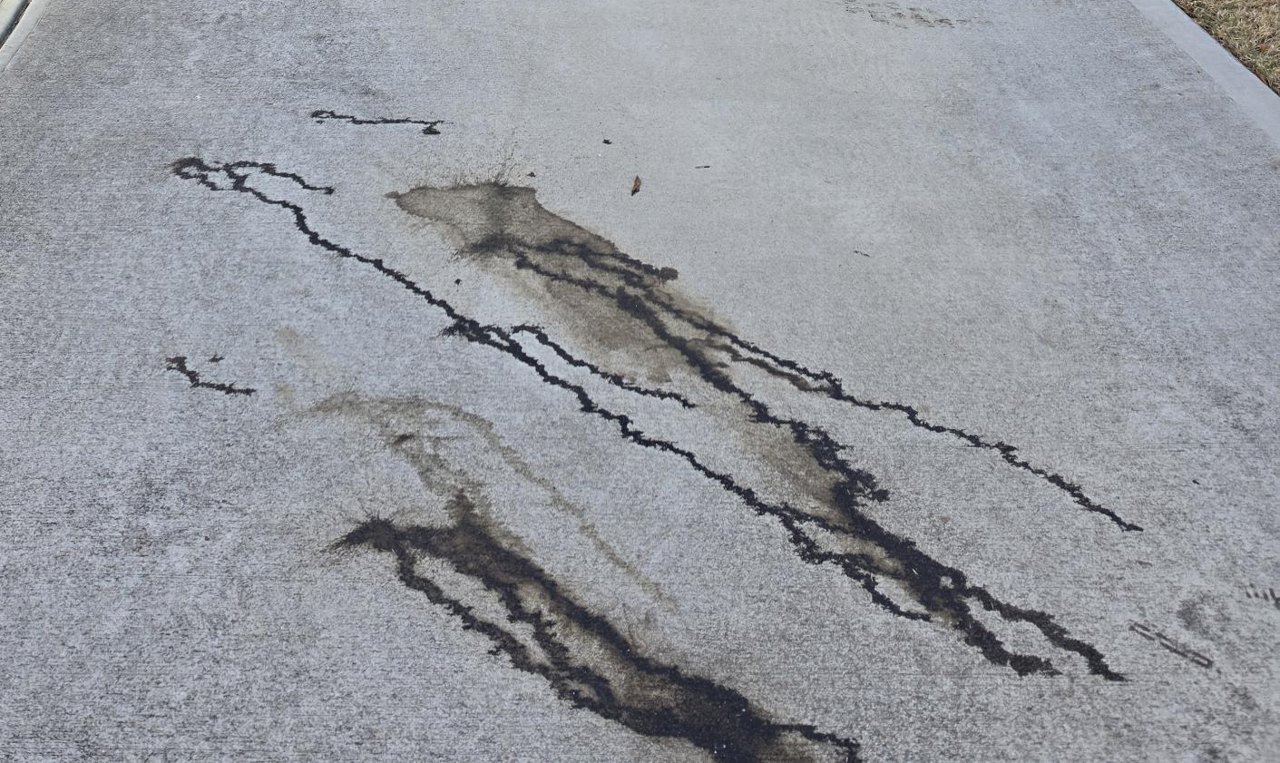
Dark oil stains and drips on a concrete driveway where a car was parked.
The car might be super clean when you arrive. When we see this on the driveway, we know right away to turn skeptical and investigate thoroughly.

Seep, leak or danger

Seep
What you see: A damp, oily film with dirt stuck to it. No drips on the ground.
What to do: Watch it and check the level. Seeps grow, so have it looked at before it becomes a leak.
Leak
What you see: Drops or spots on the driveway, or a level that keeps going down.
What to do: Keep the level topped up and get it found soon. Small leaks get bigger.
Danger
What you see: A puddle or a stream, steam, a warning light, a soft brake pedal, or the smell of fuel.
What to do: Stop driving. Brake fluid and fuel leaks are never safe to drive on.
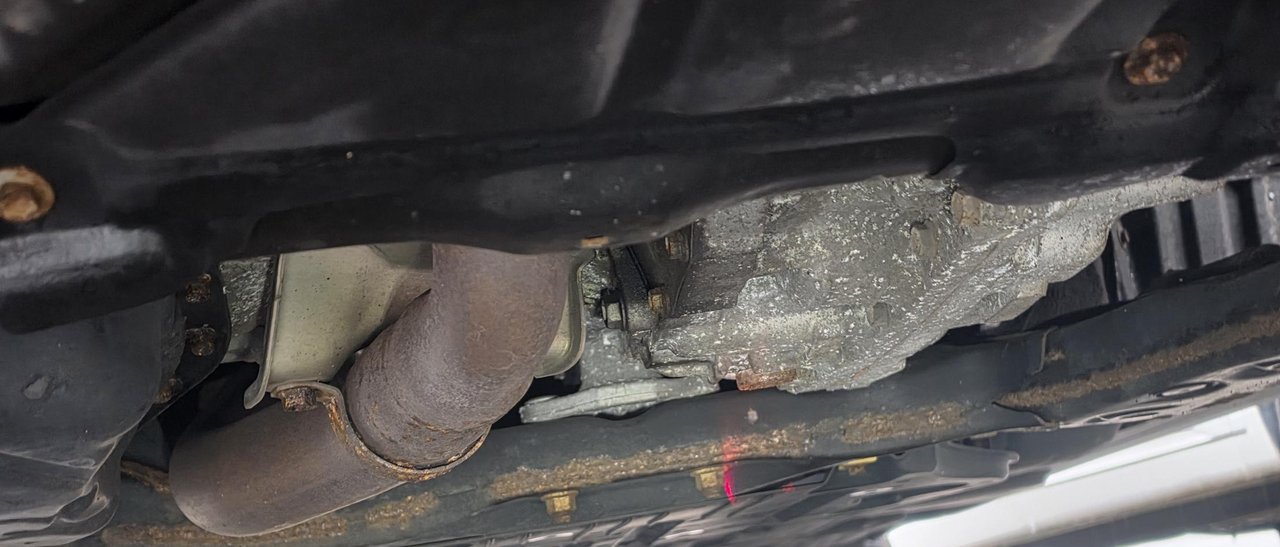
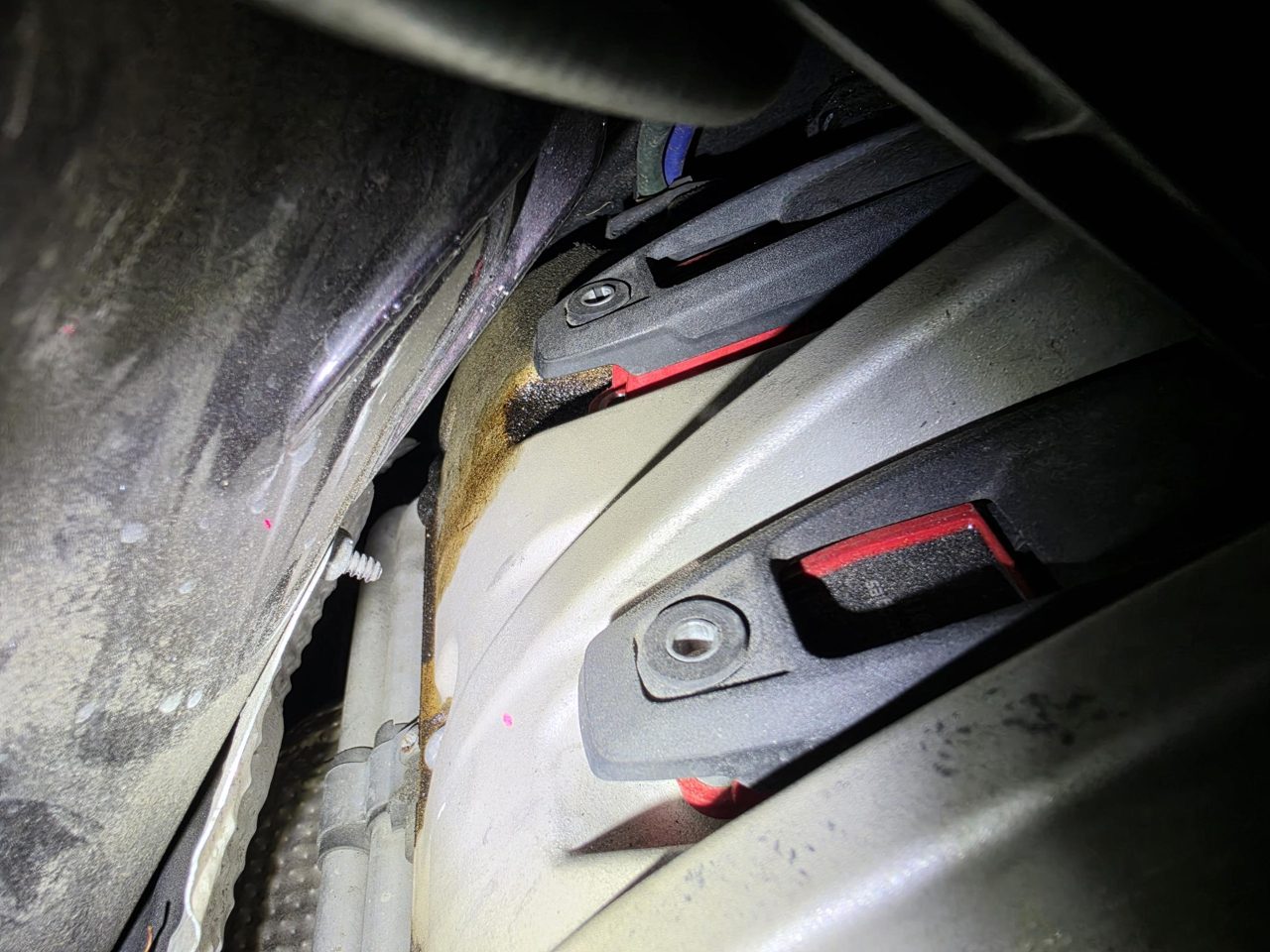
The underside of a car around the exhaust and engine, with a damp, grimy film of old oil.
A minor seep. Normal on most cars: it is not dripping, but something is there, and over time it will develop into a larger issue.

What the color tells you

Slide a piece of white cardboard under the car overnight. In the morning, look at the color, touch it, smell it, and note where it landed.

Engine oil
What it looks like: Amber when new, brown to black with use. Slick between your fingers.
Where it usually drips: Under the engine.
Coolant
What it looks like: Green, orange, pink, blue or yellow. Thin like water, smells sweet.
Where it usually drips: Under the front, below the radiator or engine.
Transmission fluid
What it looks like: Usually red or pink when new, darker with age. Oily.
Where it usually drips: Under the middle of the car, or near the front on most front-wheel-drive cars.
Brake fluid
What it looks like: Clear to yellow or brown. Slick, a little like light oil.
Where it usually drips: Near a wheel, or under the brake master cylinder on the driver's side.
Power steering fluid
What it looks like: Red, pink, amber or clear, depending on the car. Many newer cars have electric steering and no fluid.
Where it usually drips: Near the front.
Gear oil
What it looks like: Thick and dark with a strong sulfur smell.
Where it usually drips: Under a differential or the transfer case.
AC water
What it looks like: Clear, no smell, feels like water.
Where it usually drips: Front passenger side, after running the AC. This one is normal.
Washer fluid
What it looks like: Often blue, thin, smells like window cleaner.
Where it usually drips: Near the front, by a wheel or the bumper.
Fuel
What it looks like: Smells of gasoline or diesel and dries fast.
Where it usually drips: Along the fuel lines or under the tank. Don't drive it.

AC water is normal. It collects like water on a glass on a warm day, and it needs somewhere to go. The drops land in the same spot under the car every time, usually behind the engine, down low on the passenger side by the firewall, and the water is cold. If the drain clogs, the water backs up into the car, so check the passenger-side carpet. See water in your car.
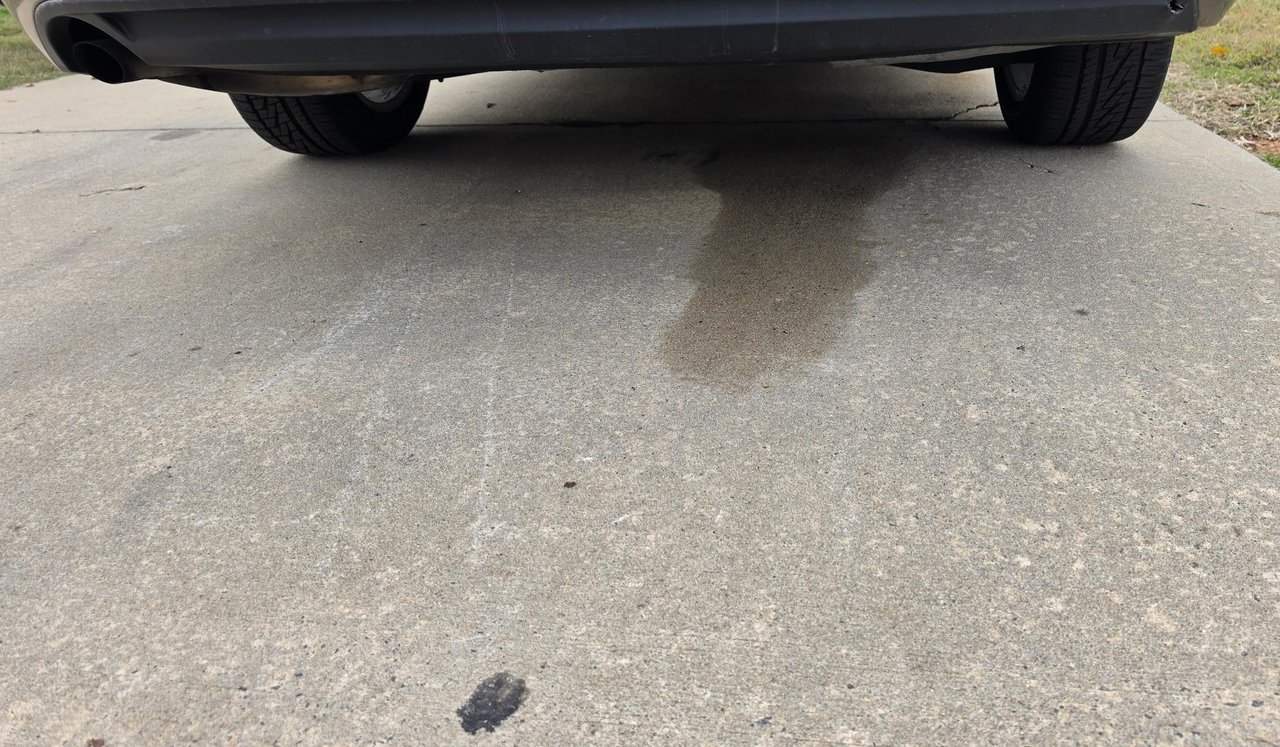
A wet streak of clear water on a concrete driveway under the back of a car.
AC condensation shows up as a leak, but it is normal water. It collects like water on a glass on a warm day, and that water needs somewhere to go.

Bonus: when an evaporator leaks, a part deep inside the dash that no one can see, we can use UV dye, and the water dripping out glows green. That confirms a repair that can run 10 hours before anyone tears a dash out going in blind.

Where leaks lead

  • Engine failure. Run an engine low on oil or coolant and it can be ruined. Coolant loss ends in overheating.
  • Water damage. A clogged AC drain or a leaking heater core puts water or coolant on the floor, where wiring and modules sit under the carpet and seats.
  • Brakes. A brake fluid leak means less braking. A soft or sinking pedal is a stop-now sign.
  • Fire. Oil or fuel dripping on a hot exhaust can smoke, and can catch.
  • Bigger bills. A seep caught early is often a gasket or a seal. The same leak left alone can take out the parts below it.

Leaks that don't drip

Some leaks never reach the driveway.

  • A torn CV axle boot won't show as a drip on your driveway. It's a greasy mess on the car, and then it makes noise. The tear lets the grease out and water and dirt in.
  • A steering rack can leak behind its boots. New boots don't stop it.
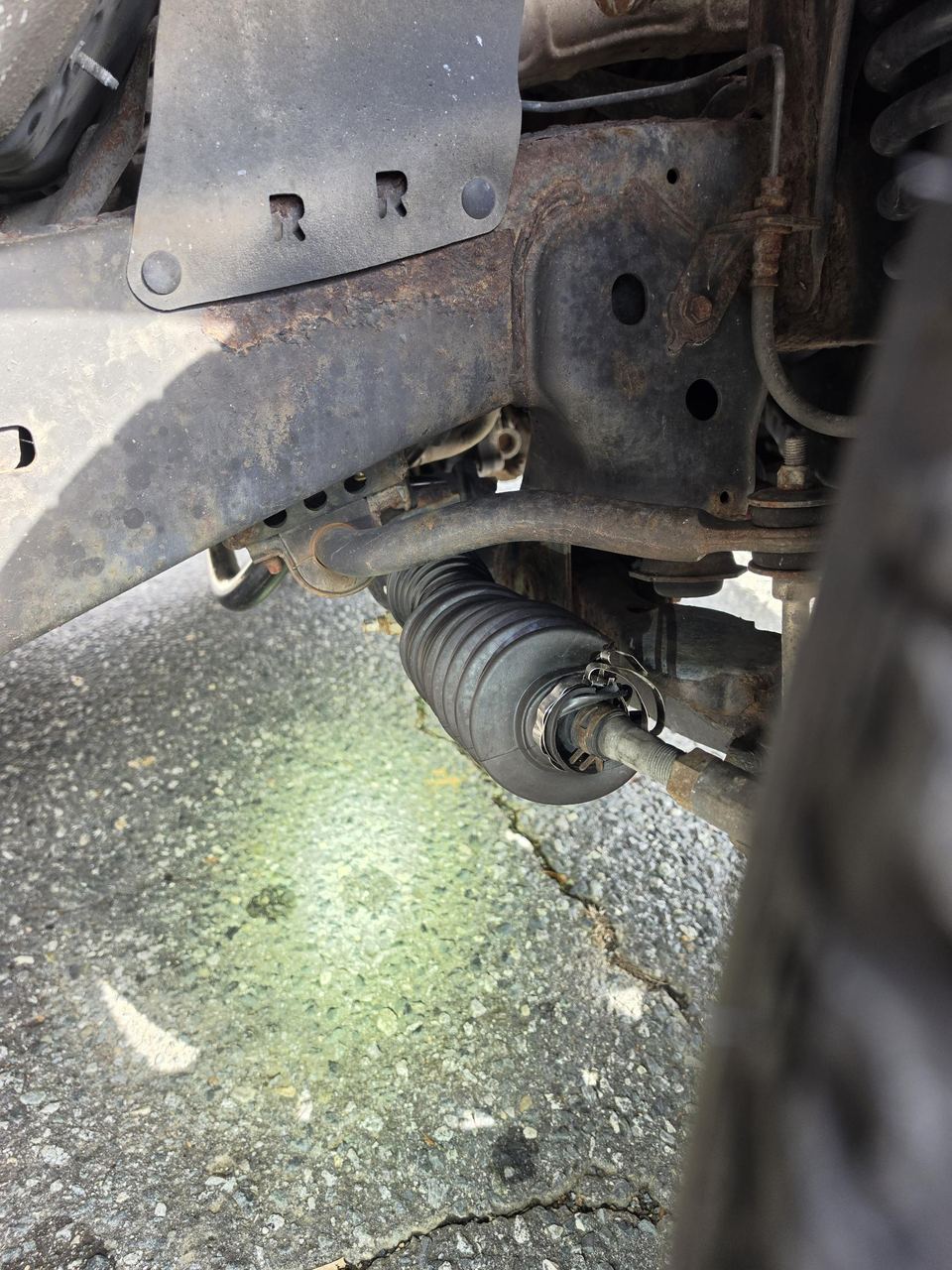
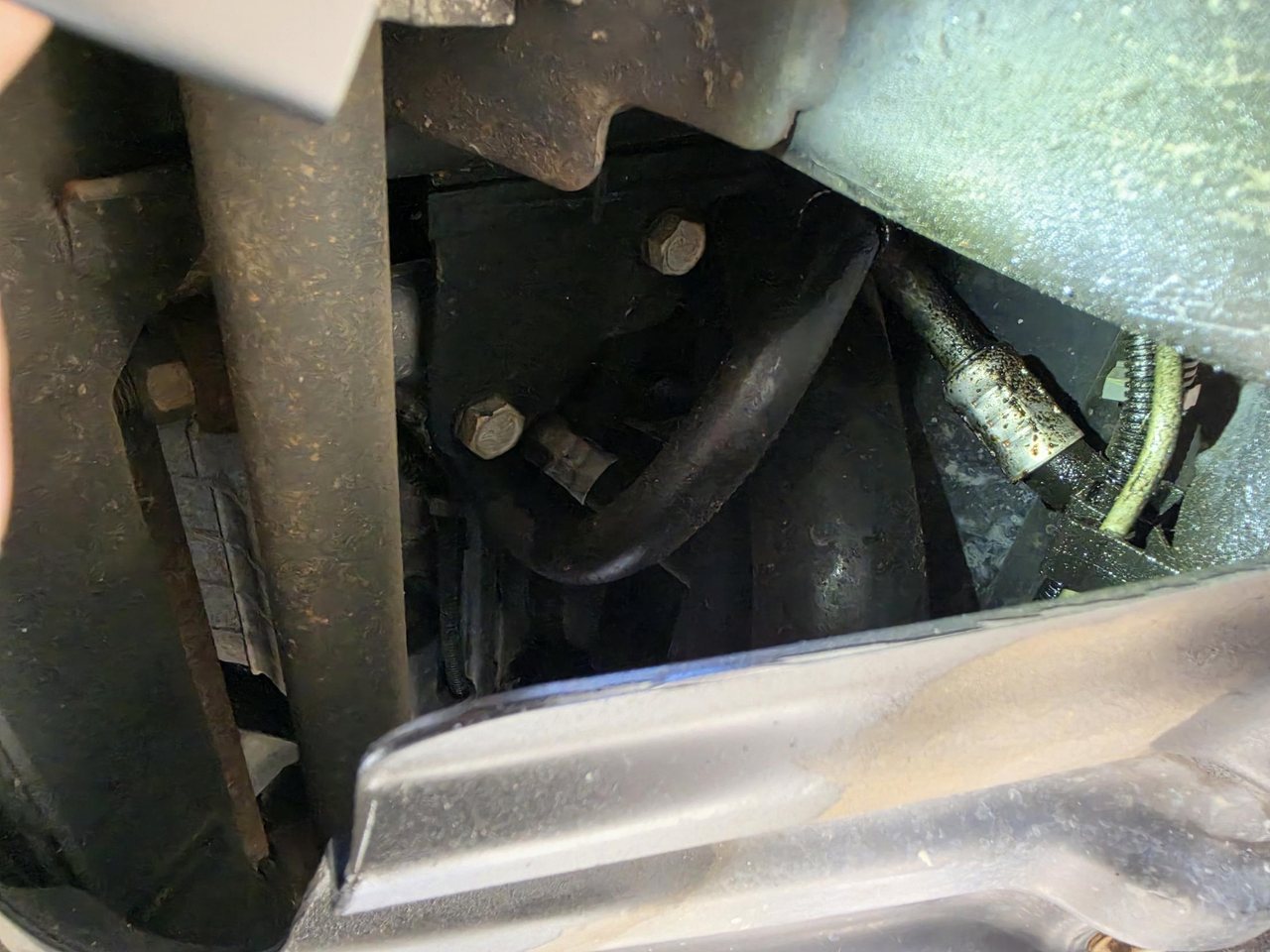
A giant aftermarket steering rack boot slid over the old one, with a mangled clamp, under a truck.
A poor repair. Notice it's a giant aftermarket boot, not designed for this vehicle, slid over the old boot, with a mangled clamp. The other side was leaking, so this must have been the worse side. It never needed boots. It needed a rack, or a restoration. What makes it worse is that this takes tools and an alignment: more than one person saw this and let the owner leave. This owner was not capable of doing this repair, and misplaced their trust. Someone in Charlotte did this.
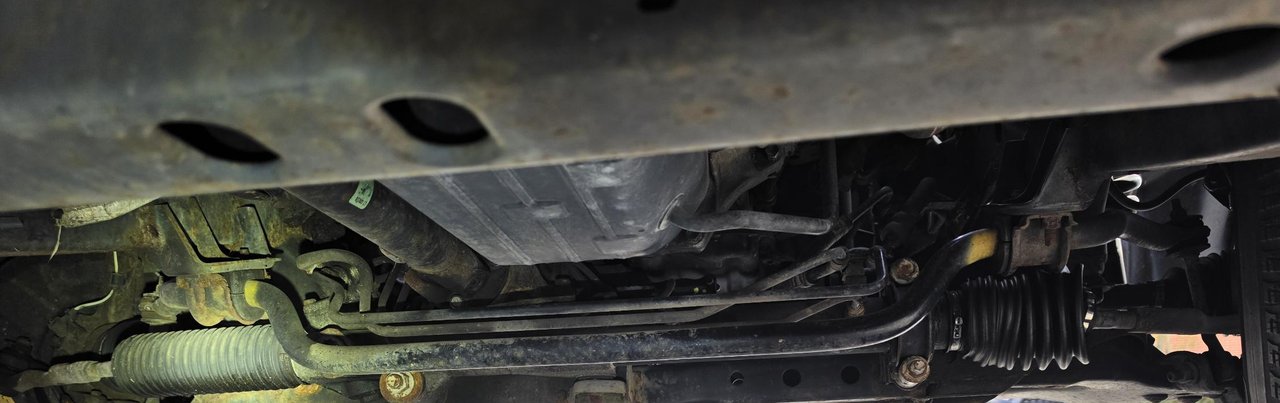
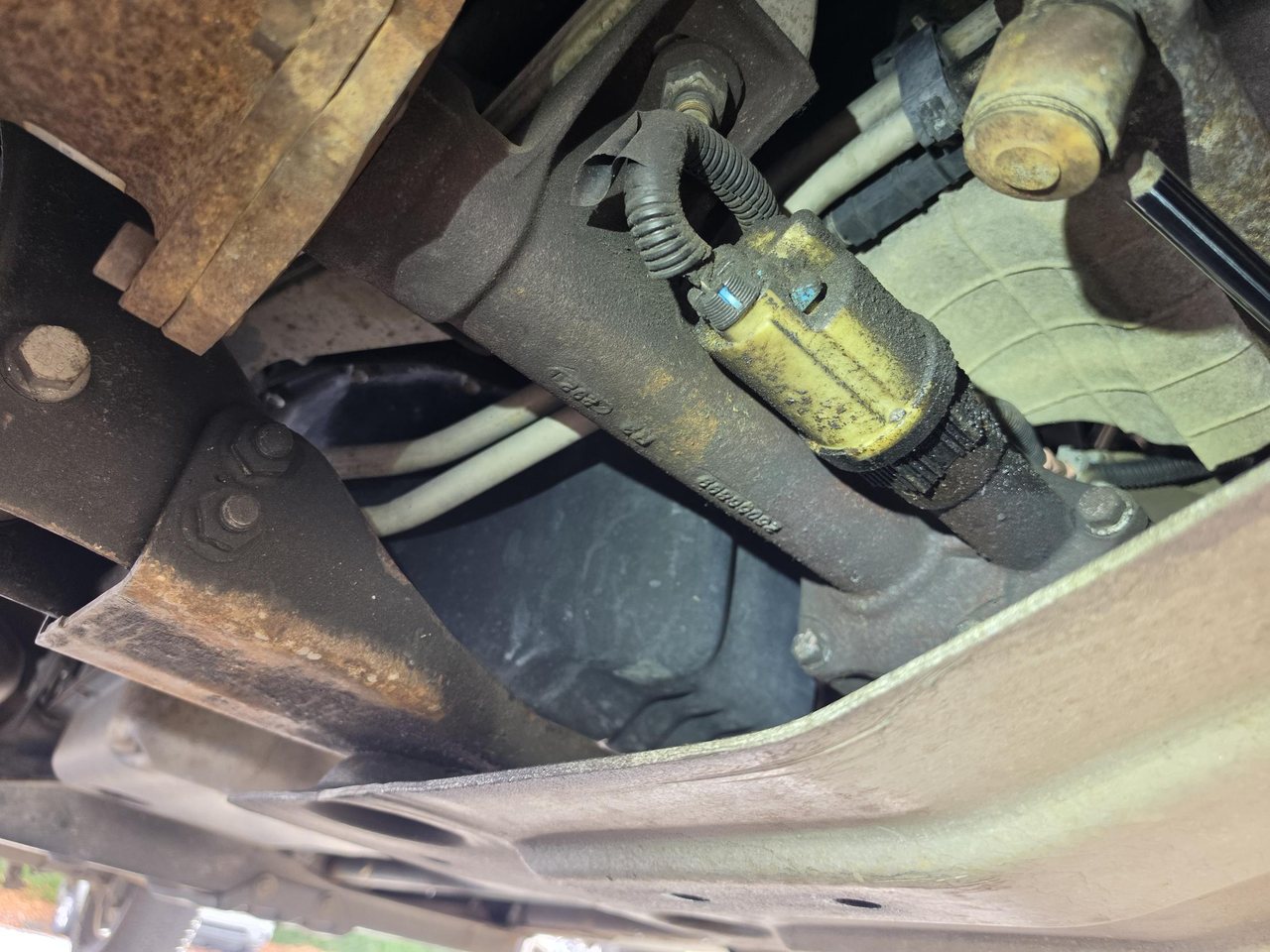
A steering rack running across the underside of a truck, wet with fluid near the far boot.
The same rack, and the other side is leaking. Changing boots does not stop a leak. The boots keep the parts clean so dirt does not damage the seals, and the seals are what really do the sealing.
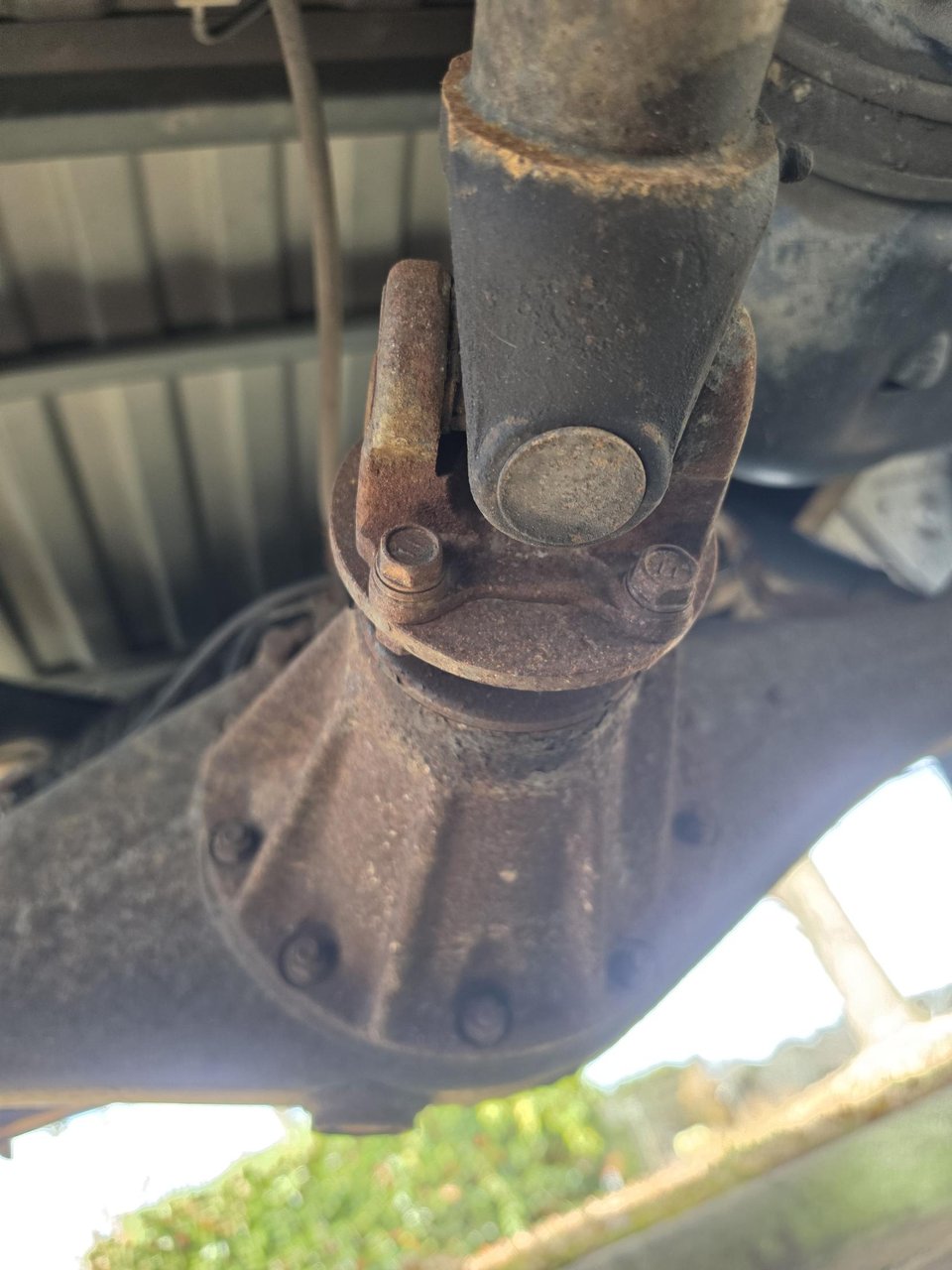
A rusted driveshaft yoke and the differential housing it bolts to, seen from under a truck.
Rust can make a seal seep even after a new one is installed. Some parts need resurfacing, machining or replacing, and should not just be patched. We work with you, and sometimes we do not know how doable a repair is until we are in it and can evaluate it.

Things you can check at home

Never open the radiator cap or coolant reservoir on a hot engine, and stay away from a hot exhaust. Never get under a car that is held up only by a jack.

  1. Do the cardboard test. Overnight, under the engine and the middle of the car.
  2. Check the levels. Engine off, parked level. Oil on the dipstick, coolant at the reservoir marks with the engine cold, brake fluid at the reservoir marks.
  3. Take a photo. The spot, and the cardboard. Send it with your request and we'll know what we are walking into.

How we find it

We get under it, then we jack it up. We do not guess. Some leaks need cleaning, UV dye and a diagnosis to find the source, and we will say so: we will find the leak, or tell you a leak exists and where we think it is.
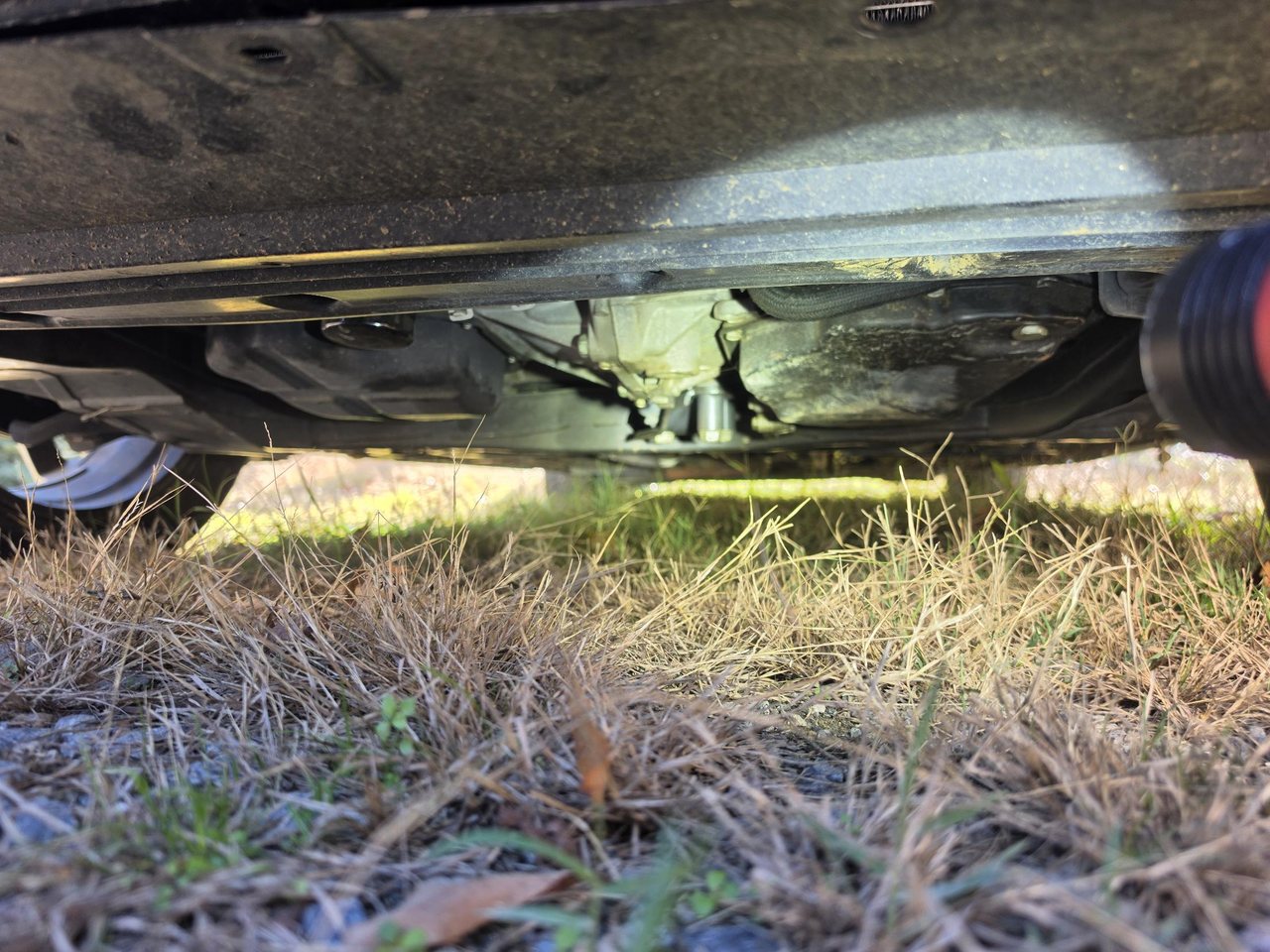
Looking under a vehicle from the ground at the transmission and oil pan, on a dirt lot.
We notice a drop, we get underneath and we find it. This one is a transmission leak, on a dirt lot.
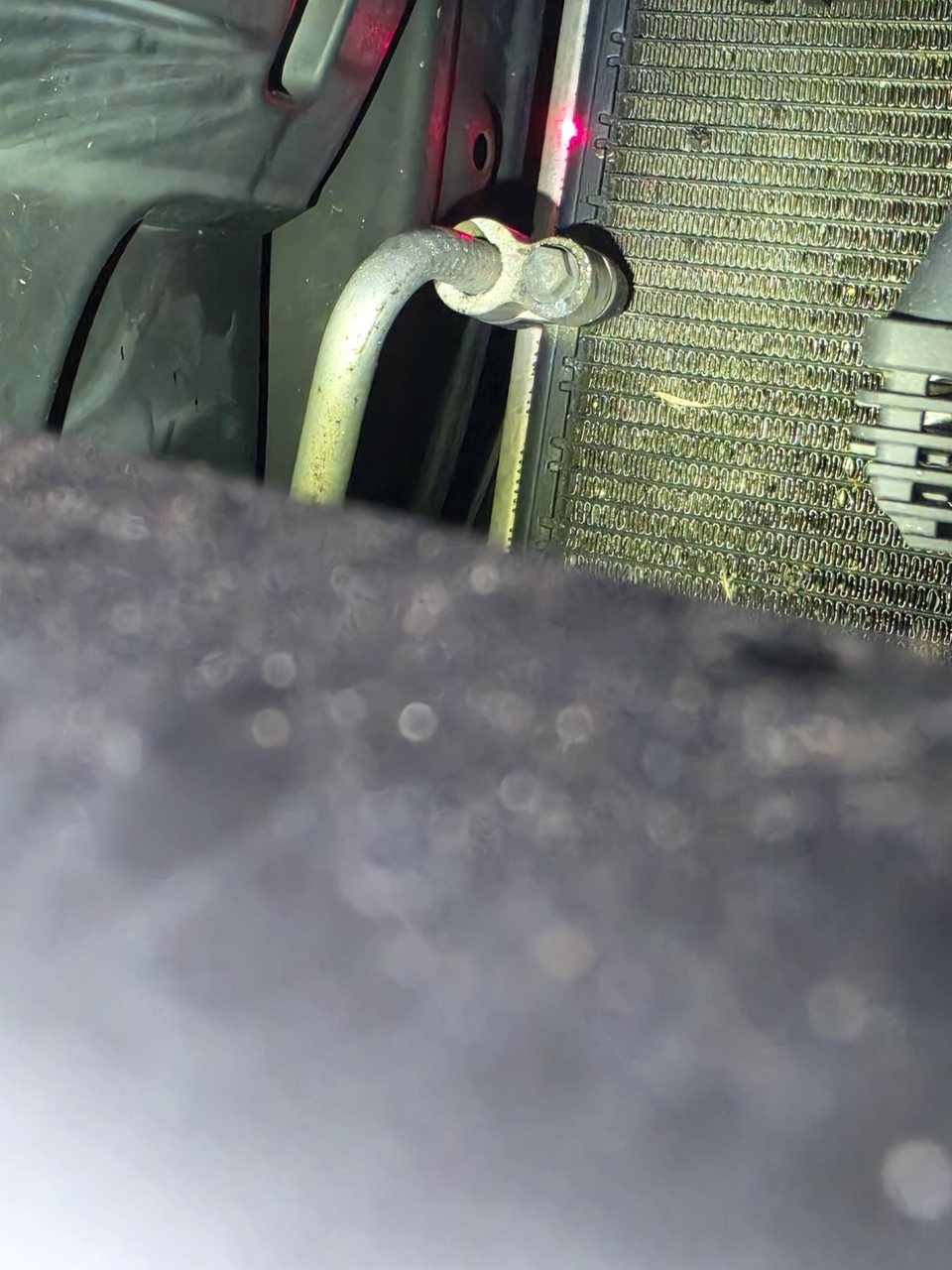
A close view of a radiator core and a coolant line, with pale corrosion where a pinhole leak has dried.
A pinhole in a radiator, found on a well-kept car at a reputable lot. So small the coolant dries off before it reaches the ground, so there was no puddle, only a snail trail of salty corrosion.
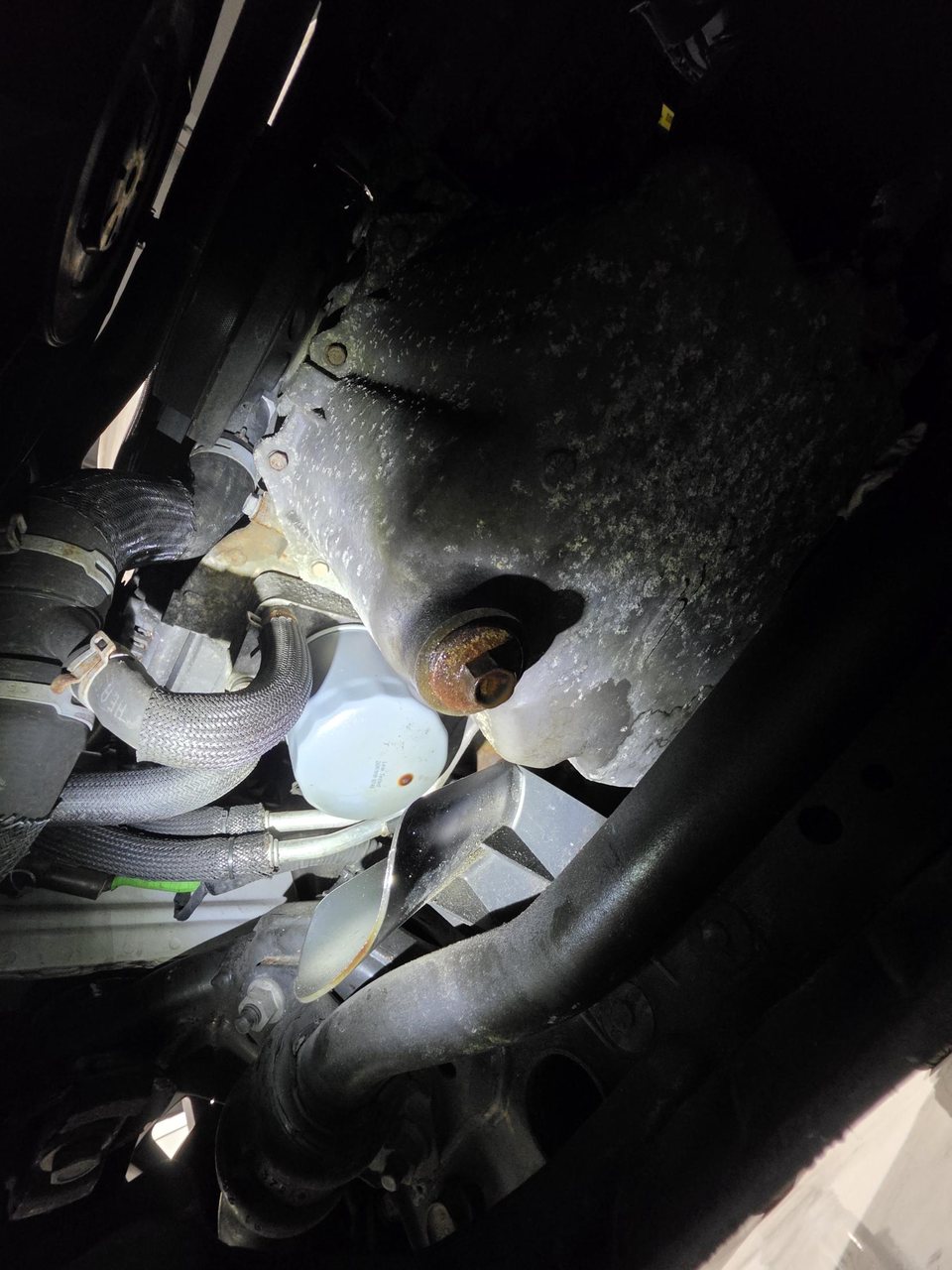
An oil filter and pan underneath a truck, with old oil left on the surrounding parts.
Not every leak is a bad leak. They are all messy. This truck is not leaking. It was a poor service and nobody cleaned it off.

Leaks we have found

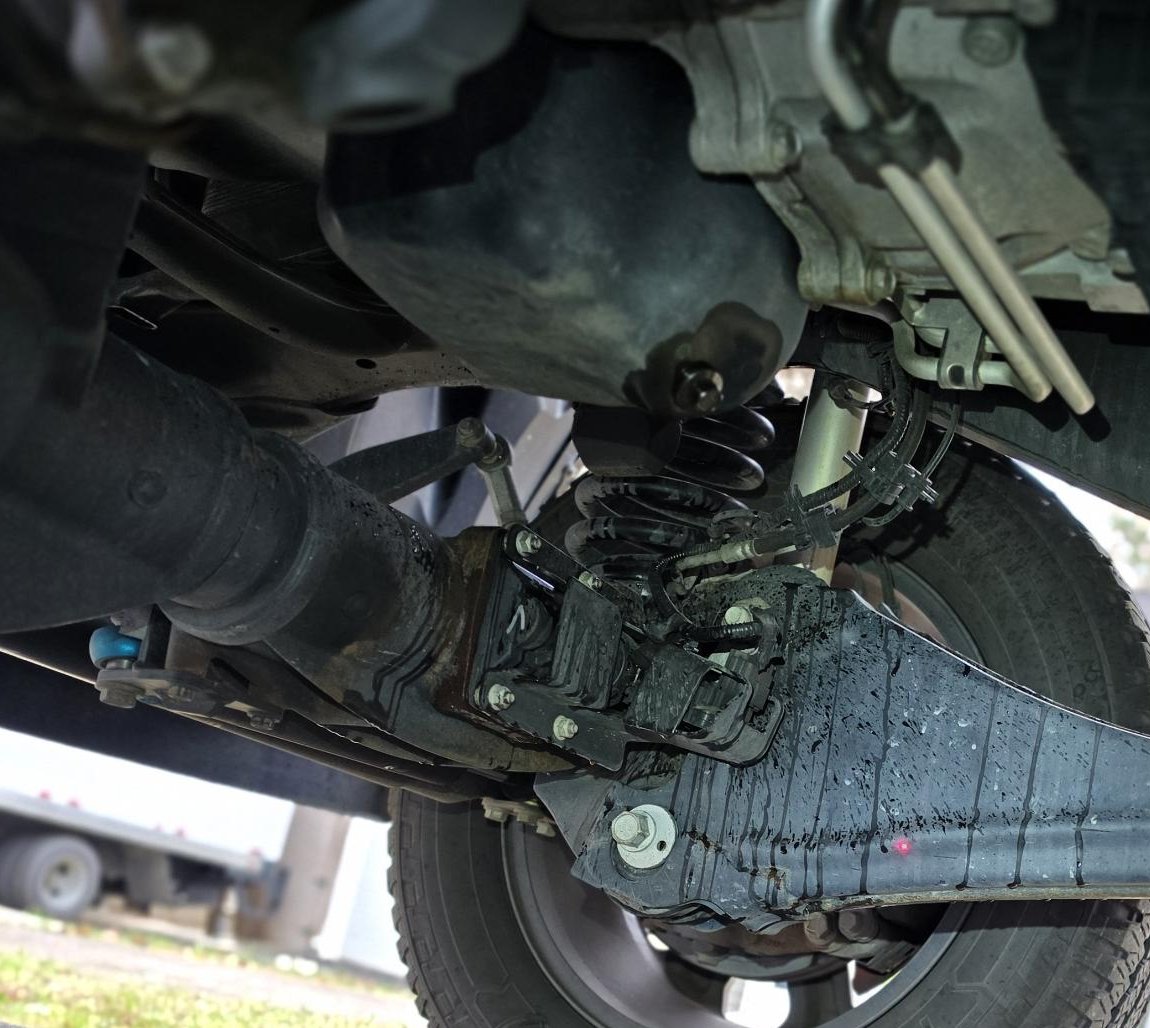
The underside of a vehicle at the rear axle and spring, wet with fluid dripped from above.
Three problems in one picture. A severe coolant leak, and where the owner was spilling while topping it off every day. An oil drain plug that has been reused too many times: tell your oil change place to put in a new one at your next visit. And keep an eye on the transmission. It is not an issue, but give it time and it will be. There is nothing to do now, but one day it will, and we cannot tell you when.
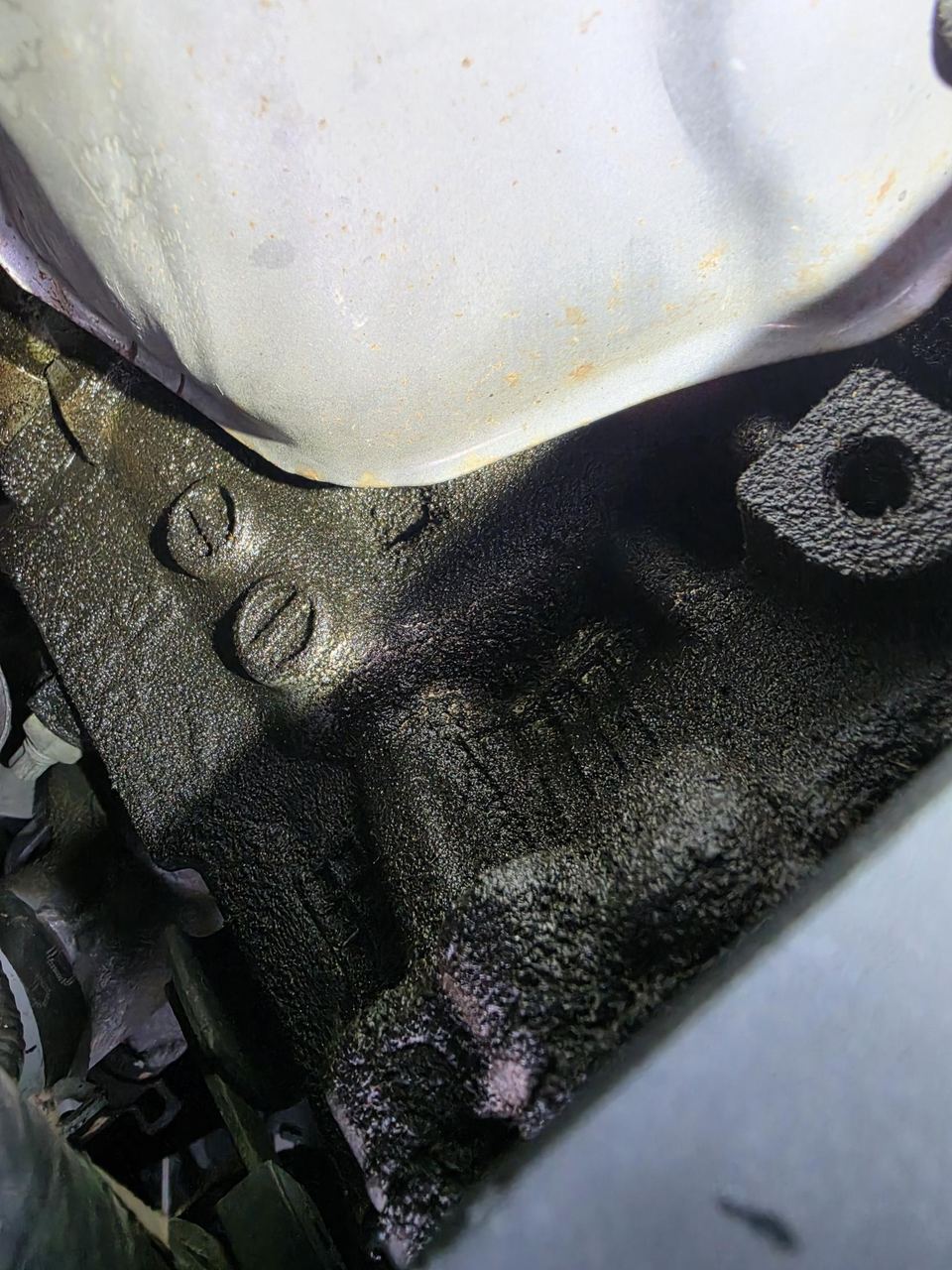
Dark oil seeping out from under a black engine cover and running down the metal below it.
The valve cover degrades and leaks oil around the spark plugs, and that oil damages the ignition coils. They are expensive, and a car takes 3 to 12 of them.
Engine parts coated in dark oil from a leak above.
A leaking valve cover, and the oil it left on everything below it.
Oil and transmission cooler lines running along the underside of a vehicle.
Oil and transmission cooler lines. Hard to find and easy to miss. A cheap part with moderate labor, and worth a heads-up before you buy.
A leak around the differential on a truck front end.
A differential seep. Not dangerous, and not going to strand you. It looks like the aging motor and its seal, so keep an eye on it. The motor looks to be the obvious future issue, and the axle seals are seeping, so a front differential restoration is looming. Not critical. On the back burner.
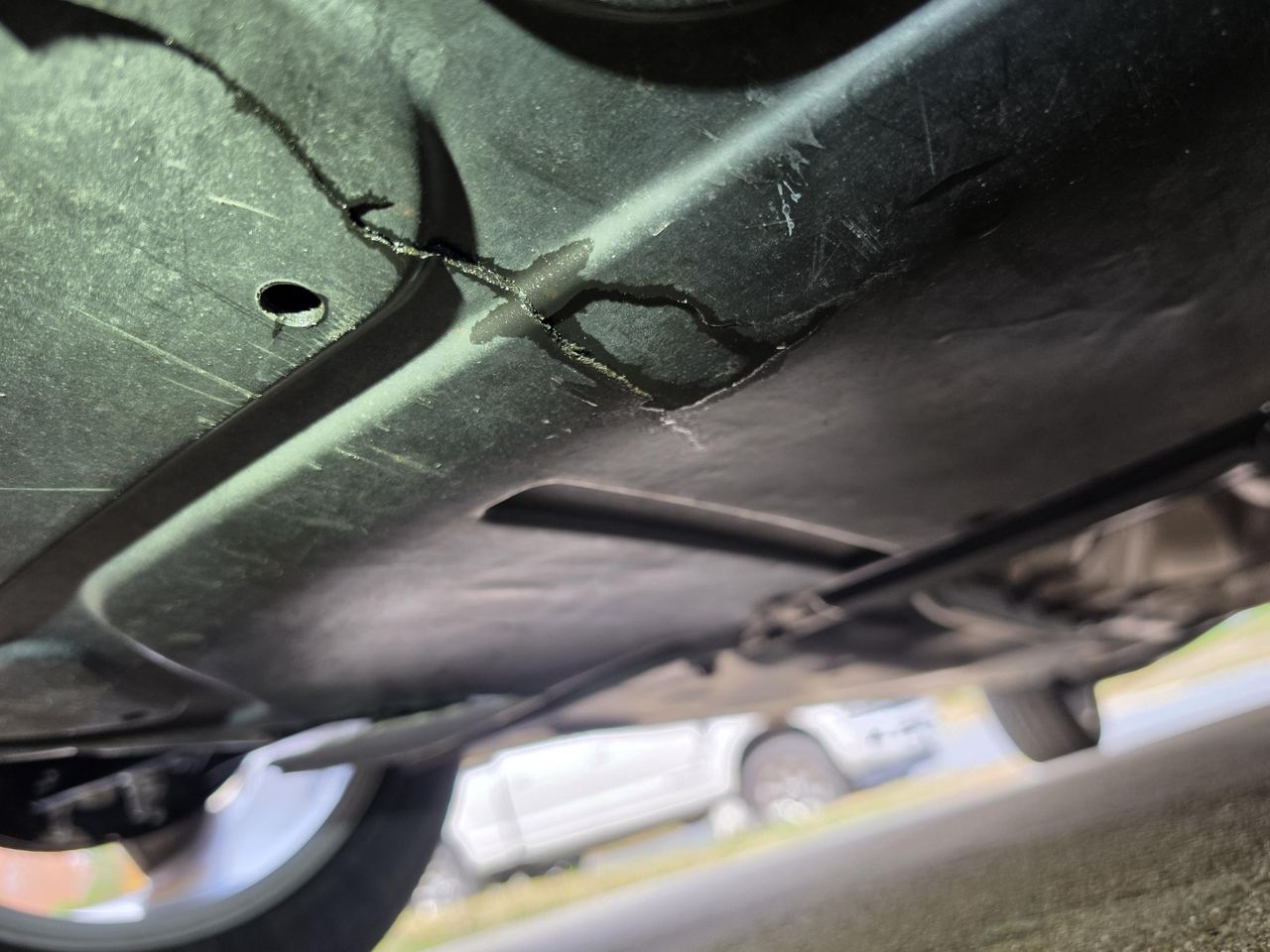
A cracked plastic tray under a car with oil seeping through the crack.
We find cracks and the source of the oil behind them. Here it was the oil level sensor in the pan.
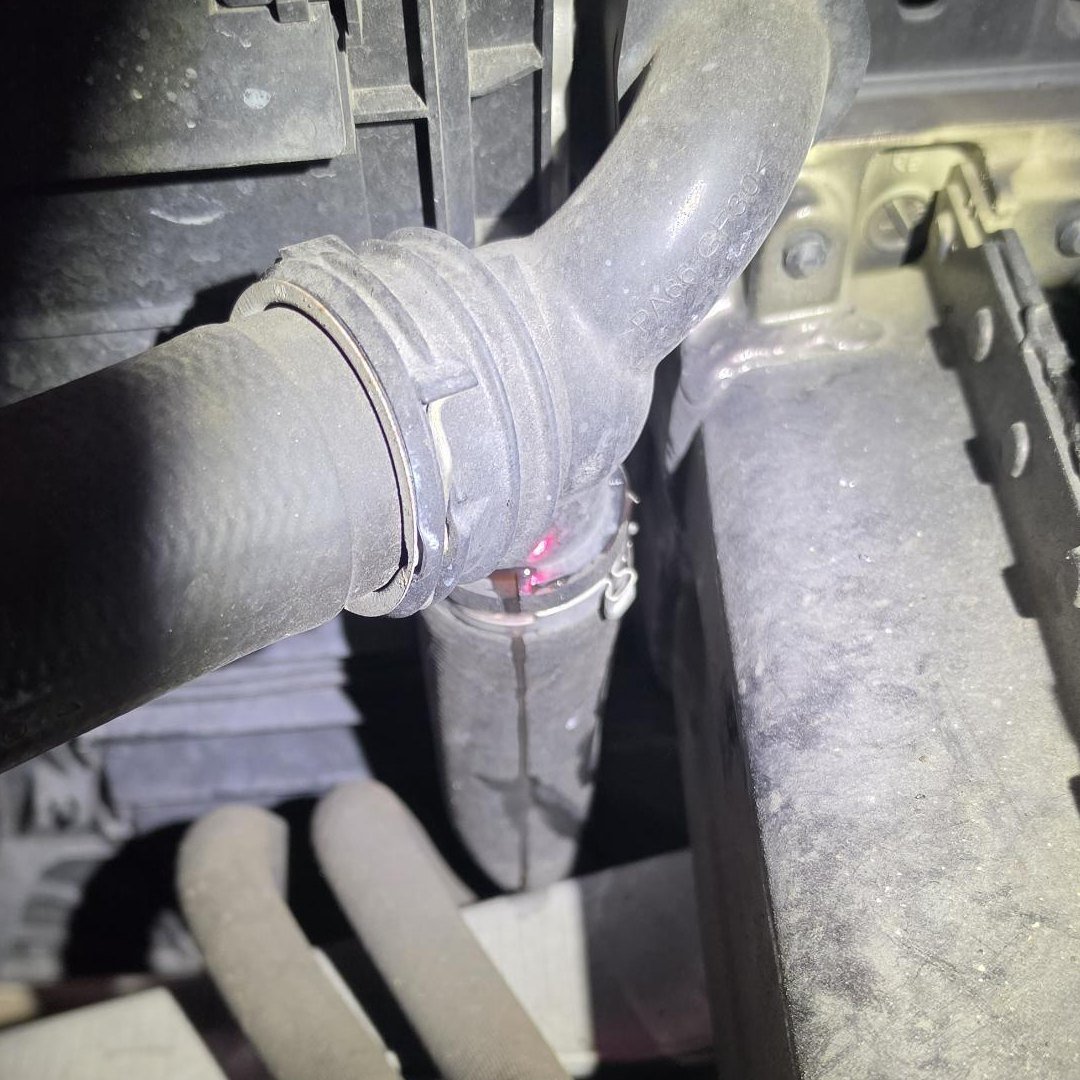
A coolant hose quick connect with a leak at the joint, marked by a red laser dot.
A coolant leak at a quick connect, where dealer-only parts exist. Sometimes you cannot get the part from the dealer or a parts store, and you need online or, worse, junkyard sources to fix it. We find out if parts are discontinued. That could be a hidden reason the seller wants out of the car.

Getting it fixed

  • Find the cause first. The right part gets replaced, not a guess.
  • Written estimate first. You see what's leaking before any work starts.
  • Where: many leaks get fixed where the car is parked, in Lake Norman, Mooresville, Denver, Lincolnton and Statesville. Not every car can be done in a driveway.
  • Transmissions: we don't repair them. We diagnose it and get you to a reputable shop in our network.

Get a quote for a fluid leak diagnosis

Updated November 28, 2026.

Questions

My car drips clear water. Is that a leak?

Usually not. Clear water with no smell near the front passenger side after running the AC is condensation, and it's normal. Water on the floor inside the car is not: that can be a clogged AC drain.

Is a small oil leak OK to drive with?

A seep, for a while, if you keep the level up. A drip gets bigger, and oil on a hot exhaust can smoke or catch. Have it found before it gets there.

Can a leak start without warning?

Yes. Most give you spots on the driveway first, but a hose, line or seal can let go all at once, sometimes on the highway.

Should I use a stop-leak product?

No. We're not a mechanic in a bottle. Stop-leak can clog passages, and it hides the problem instead of fixing it.

Everything under my car is wet. Is it all leaking?

Not always. Old fluid from a sloppy service or an old leak that was fixed can look the same as a live one. We clean it and look again before we call it.

Buy And Drive With Confidence.

Send a request and a person writes back with a quote and open times. Or call or text.

Get a quote

Questions? Call or text 980-250-5063

Get a quote Ask us a question