The short answer
Grinding when you brake almost always means the pad material is gone and metal is rubbing metal. It's not safe to keep driving. Stopping distances get longer, and every stop cuts into the rotor and can damage the caliper.
A light grind for the first few stops after rain, from surface rust on the rotors, is normal if it goes away quickly. A grind that stays is not.
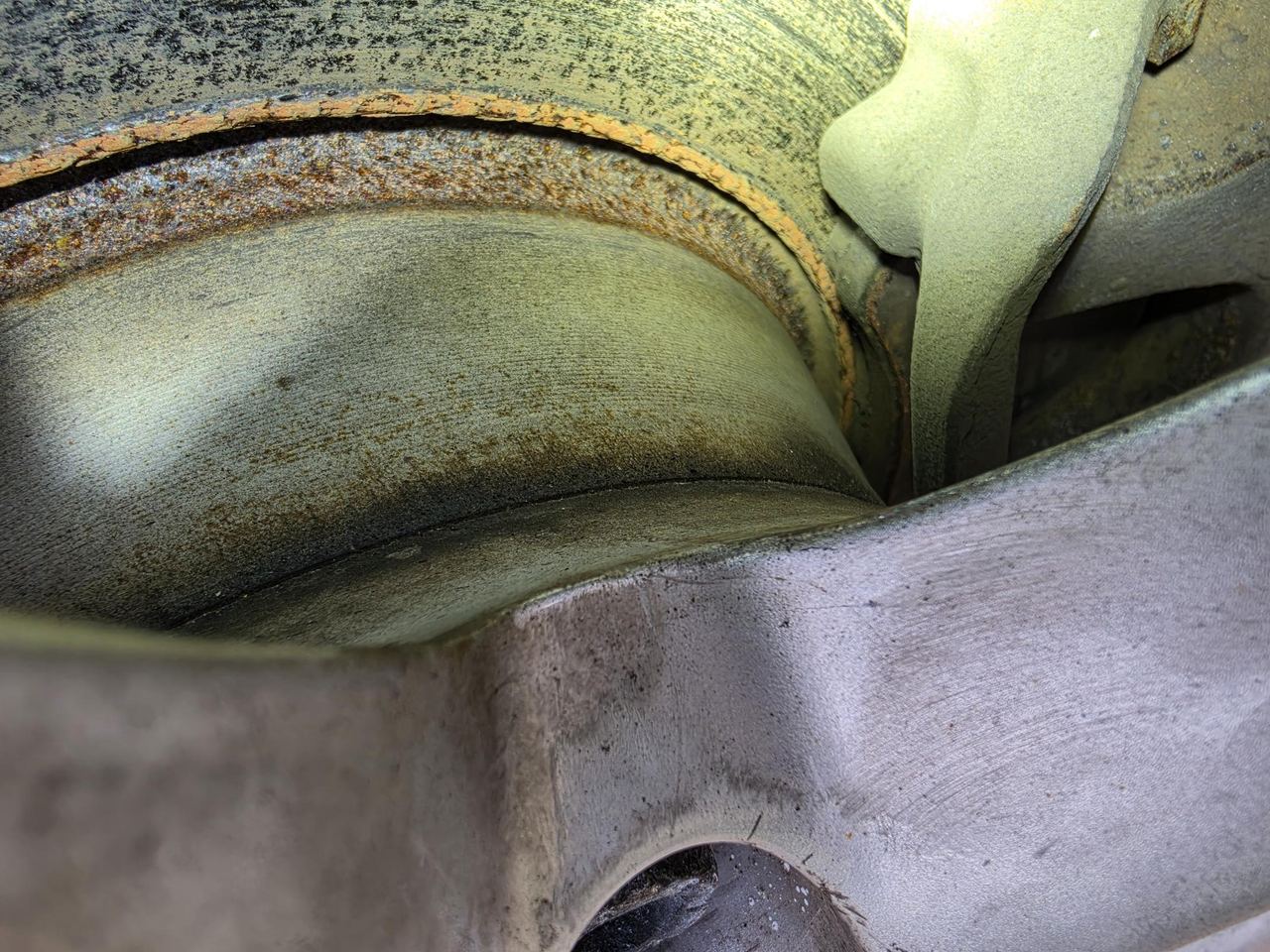
The warning most people miss
The point of no return. The squeal is a small metal tab, the wear indicator, built to rub the rotor when about 2 mm of pad is left. We see it ignored until the tab breaks off. The squeal stops, and it sounds like the car worked through something or fixed itself. It didn't. With the tab gone, nothing warns you, and a few weeks later the pad is gone and it's metal on metal: a loud grind, and a rotor and often a caliper that now need replacing too.
If your brakes squealed for a while and then went quiet, have them checked even if nothing seems wrong.
Other causes of grinding
- A stuck caliper or seized pad wears one pad to metal long before the others.
- A rock or debris caught between the rotor and its dust shield. Often a scraping sound that comes and goes.
- A bent dust shield rubbing the rotor.
- Rust buildup on a car that sat for a long time.
What gets fixed
Once it's metal on metal, it's rarely pads alone. Expect new pads and rotors on that axle, and a caliper if it overheated or stuck. Catching it at the squeal costs less.
Getting it fixed
- Find the cause first. The right part gets replaced, not a guess.
- Written estimate first. You see what failed before any work starts.
- Your choice of part. Options are ranked by quality and warranty term, from the best aftermarket and OEM parts.
- Where: where the car is parked, in Lake Norman, Mooresville, Denver, Lincolnton and Statesville. Like every repair we list, not every car can be done in a driveway. If we quoted your repair and can't reach the part when we arrive, you don't pay for the repair.
Updated November 28, 2026.