The short answer
The battery light means the charging system isn't keeping up. Despite the name, the usual cause is the alternator, its belt or its wiring, not the battery itself. The car is running on battery power alone, and it will die when that runs out.
- Turn off what you don't need: radio, heated seats, rear defrost, the blower.
- Head somewhere safe to park, not on a long trip.
- If the temperature gauge climbs too, pull over. On many engines the same belt drives the water pump, and a broken belt means overheating.
Common causes
- A failing alternator.
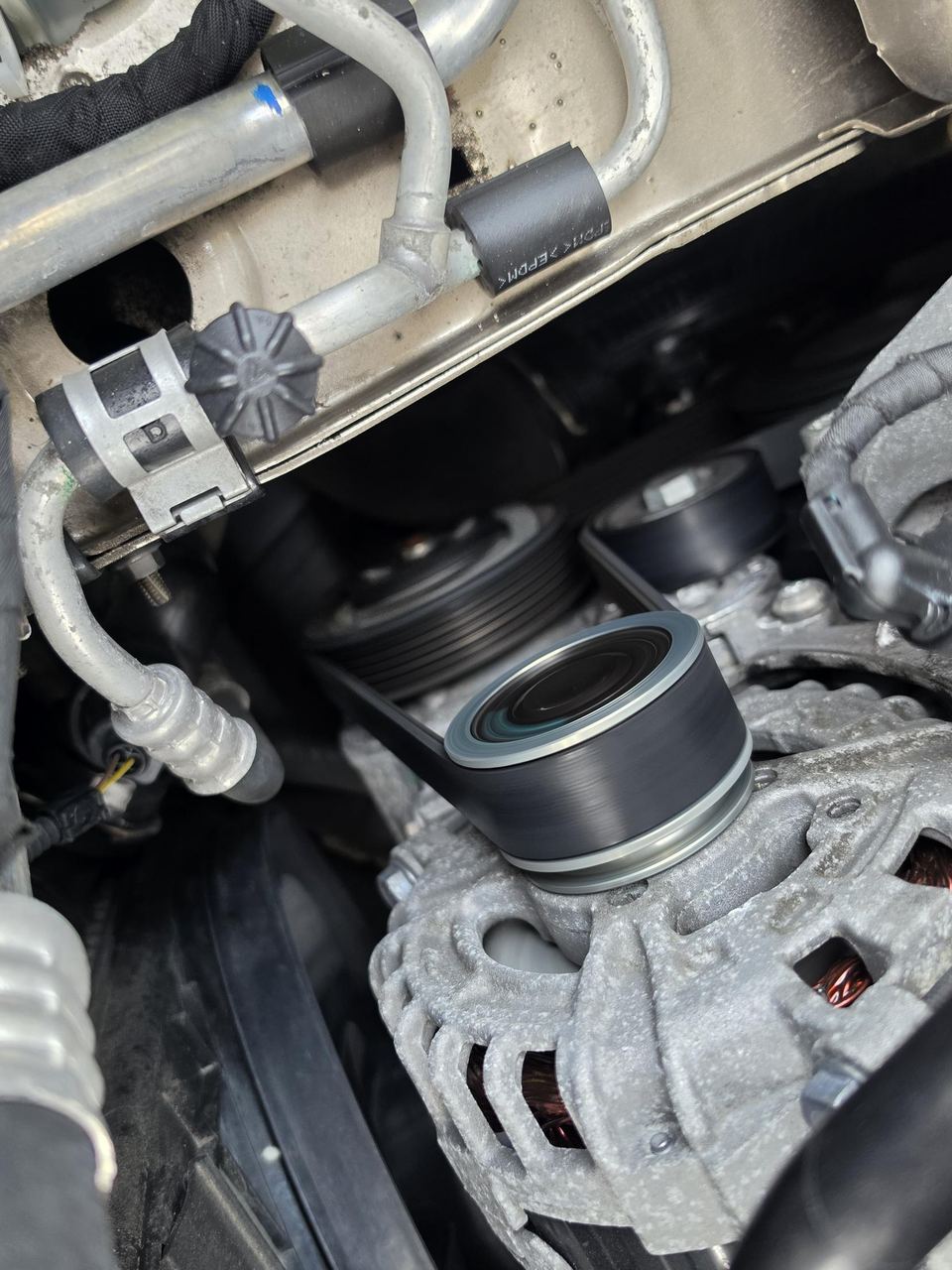
- A slipping, worn or broken belt, or a weak tensioner.
- A loose or corroded battery cable or ground.
- A blown fuse or wiring fault in the charging circuit.
- A failing battery that can't take a charge, less often.
How it gets checked
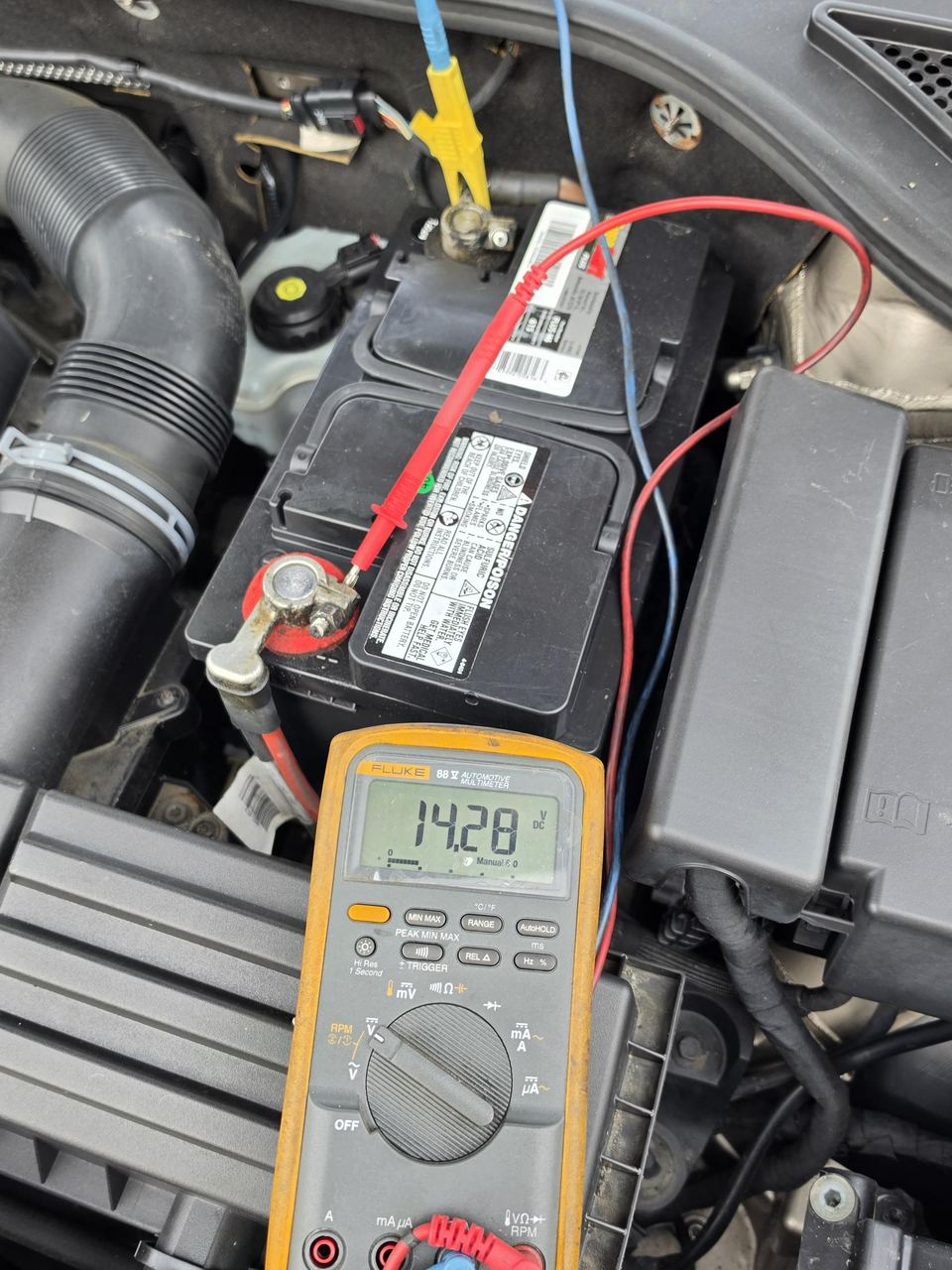
You can do a first check with a cheap multimeter: about 13.5 to 14.5 volts at the battery with the engine idling, holding steady with the lights and blower on. See our battery page for how.
We check the belt and tensioner, test charging voltage at idle and under load, test the battery, and read the charging codes. On smart-charging cars we read what the computer is asking the alternator to do, so a normal low reading isn't mistaken for a fault.
Getting it fixed
- Find the cause first. The right part gets replaced, not a guess.
- Written estimate first. You see what failed before any work starts.
- Your choice of part. Options are ranked by quality and warranty term, from the best aftermarket and OEM parts.
- Where: where the car is parked, in Lake Norman, Mooresville, Denver, Lincolnton and Statesville. Like every repair we list, not every car can be done in a driveway. If we quoted your repair and can't reach the part when we arrive, you don't pay for the repair.
Get a quote for a charging system test
Updated November 28, 2026.